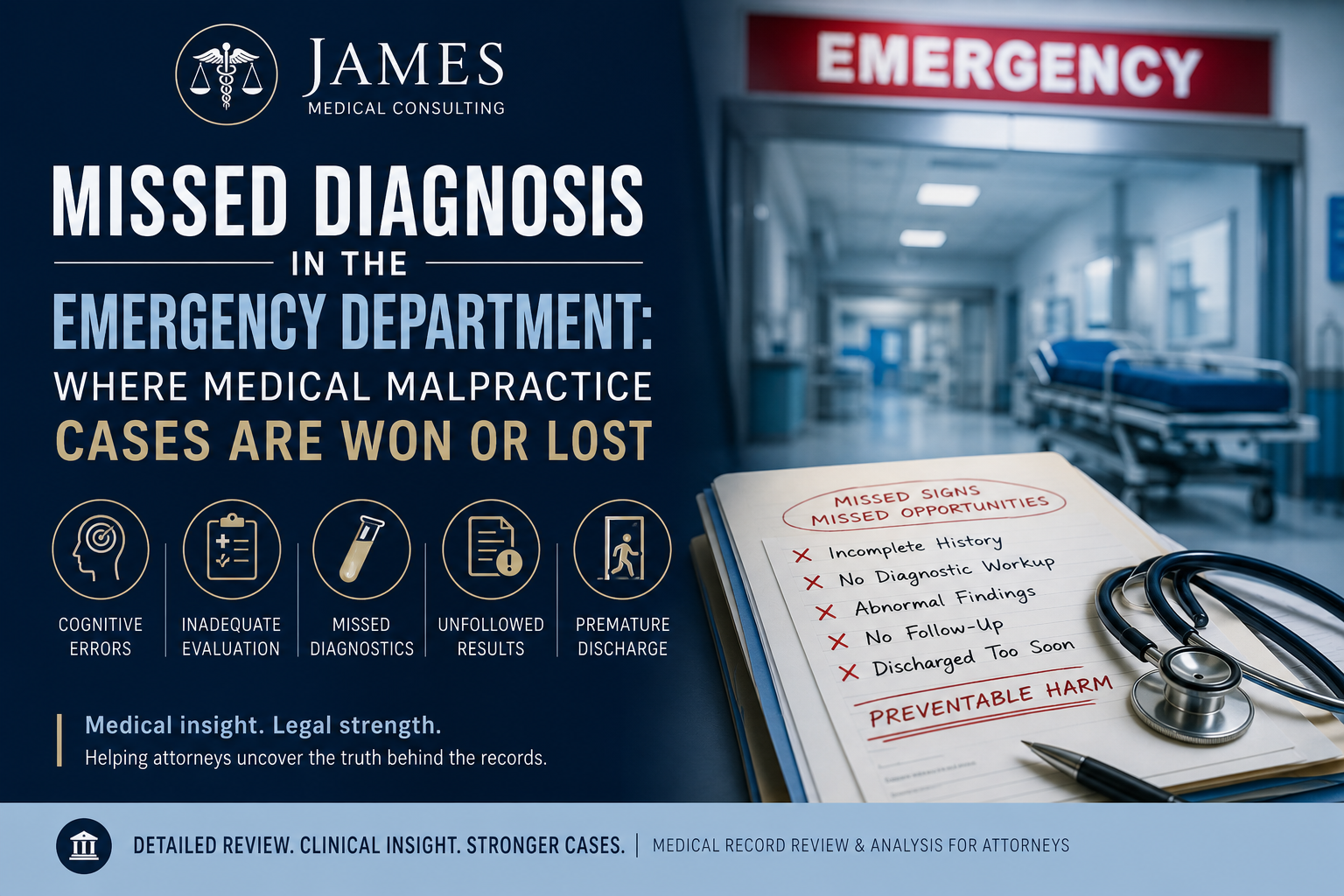
Missed Diagnosis in the Emergency Department: Where Medical Malpractice Cases Are Won or Lost
Emergency departments are fast-paced, high-pressure environments where providers must make rapid decisions often with limited information. While most care is appropriate, missed or delayed diagnoses remain one of the leading causes of medical malpractice claims.
For attorneys handling personal injury and medical malpractice cases, understanding how and why these diagnostic failures occur can be the difference between a weak claim and a highly defensible case.
As a Physician Assistant with real-world experience reviewing medical records, I consistently see patterns that point to preventable errors—and overlooked opportunities.
Why Missed Diagnoses Happen
Emergency medicine is inherently complex, but certain breakdowns appear repeatedly in malpractice cases:
1. Anchoring Bias
Providers may fixate on an initial diagnosis and fail to adjust when new information becomes available.
Example:
A patient presents with chest pain and is diagnosed with anxiety—despite abnormal vital signs and risk factors for cardiac disease.
2. Inadequate History & Physical Exam
Incomplete documentation or failure to fully assess the patient can lead to critical missed clues.
Red Flag for Attorneys:
Generic documentation such as “normal exam” without detail in high-risk complaints (e.g., abdominal pain, headache, chest pain).
3. Failure to Order Appropriate Diagnostics
Not ordering imaging, labs, or specialty consults when clinically indicated is a common issue.
Common Misses Include:
CT scans for suspected stroke or head bleed
Cardiac workups for chest pain
Imaging for persistent abdominal pain
4. Unfollowed Test Results
One of the most overlooked—and powerful—issues in malpractice cases.
Example:
A radiology report notes a suspicious mass or abnormality, but there is no documentation that the patient was informed or that follow-up was arranged.
This alone can significantly strengthen causation and damages.
5. Premature Discharge
Patients are sometimes discharged before a full evaluation is completed or before their condition stabilizes.
What to Look For:
Minimal observation time
Persistent abnormal vital signs at discharge
No clear discharge instructions or return precautions
Key Medical Record Clues Attorneys Should Look For
When reviewing emergency department records, these details can quickly identify potential negligence:
Time gaps in documentation during critical periods
Copy-and-paste charting (“WNL” repeated across visits)
Contradictions between nursing notes and provider documentation
Abnormal findings without follow-up
Lack of reassessments prior to discharge
These subtle details are often where strong cases are built.
Why Medical Insight Matters Early
One of the biggest mistakes in malpractice litigation is waiting too long to involve a medical consultant.
Early case review can:
Identify deviations from the standard of care
Strengthen case strategy from the start
Save time and resources on weak claims
Highlight documentation inconsistencies that may otherwise be missed
How I Help Attorneys Build Stronger Cases
Through detailed chart review and clinical analysis, I help attorneys:
Break down complex medical records into clear, actionable insights
Identify missed diagnoses and delays in care
Highlight documentation gaps and inconsistencies
Provide timelines that clarify what happened—and what should have happened
My background in emergency and urgent care medicine allows me to quickly identify the issues that matter most.
Conclusion
Missed diagnoses in the emergency department are rarely the result of a single mistake. Instead, they are often the culmination of small oversights, rushed decisions, and documentation failures.
For attorneys, knowing where to look—and what to look for—can transform a case.
If you’re handling a potential malpractice claim and want a clinical perspective early in the process, having the right medical insight can make all the difference.